The Science Behind Staying Connected
There is a moment that many people over 50 recognize but rarely talk about openly. The children have grown and moved on. The career that once filled forty or fifty hours a week has slowed or ended. The social circle that once felt effortless to maintain has quietly contracted. And somewhere in the middle of all that transition, a creeping sense of isolation takes hold — gradual enough that it is easy to dismiss, significant enough that it leaves a mark.
What most people do not realize is that social isolation is not just emotionally uncomfortable. It is neurologically damaging. The research on social connection and brain health has grown substantially over the past two decades, and the findings are striking: loneliness and social isolation in older adults are now recognized as significant risk factors for cognitive decline, dementia, and accelerated brain aging.
The reverse is equally true and considerably more encouraging. Maintaining meaningful social connections after 50 is one of the most powerful things you can do to protect your brain — comparable in impact to physical exercise, a brain-healthy diet, and quality sleep. It is also one of the most enjoyable.

This article explores what the science says about why social connection matters so much for brain health after 50, what happens neurologically when we are isolated, and practical ways to stay meaningfully connected in the second half of life. If you are also looking at the dietary side of cognitive protection, our article on the 10 best brain foods for seniors covers the nutritional foundations that work alongside social engagement to keep the aging brain sharp.
The Loneliness Epidemic Nobody Is Talking About
Before exploring neuroscience, it is worth acknowledging the scale of the problem. Loneliness among older adults is not a minor or occasional issue — it is a widespread and growing public health concern.
A report from the National Academies of Sciences, Engineering, and Medicine found that more than one-third of adults aged 45 and older report feeling lonely, and nearly one-quarter of adults over 65 are considered socially isolated. The United Kingdom appointed a Minister for Loneliness in 2018 in direct response to the scale of the problem. The United States Surgeon General issued an advisory on the loneliness epidemic in 2023, describing it as a public health crisis.
The timing of this epidemic matters. The years after 50 are precisely when the social structures that once provided automatic connection — workplaces, school communities, young family households — begin to recede. Without intentional effort to maintain and build social connections, isolation can develop gradually and silently, with consequences that extend well beyond mood and emotional well-being.
What Happens to the Brain When We Are Isolated
To understand why social connection protects the brain, it helps to understand what isolation does to it.

Chronic stress and cortisol elevation
Loneliness activates the body’s stress response. When the brain perceives social isolation — which it is wired to treat as a threat, given that humans evolved as deeply social animals — it elevates cortisol, the primary stress hormone. Short-term cortisol elevation is a normal and useful response to acute stress. Chronic cortisol elevation is a different matter entirely.
Research has shown that chronically elevated cortisol shrinks the hippocampus — the region of the brain most directly responsible for forming and retrieving memories. This is one of the most well-established mechanisms by which chronic stress impairs memory and contributes to cognitive decline. Chronic loneliness keeps the stress response activated and cortisol elevated, directly damaging brain tissue over time.
Reduced cognitive stimulation
Social interaction is cognitively demanding in the best possible way. Following a conversation requires attention, working memory, and rapid processing. Picking up on emotional cues requires empathy and social cognition. Navigating group dynamics requires executive function. Telling a story requires language retrieval and narrative construction.
When social interaction decreases, so does the cognitive workout that comes with it. The brain, like any complex system, responds to reduced demand by becoming less efficient. The neurons and neural pathways that support social cognition require regular use to remain strong. Isolation quietly allows them to weaken.
Increased neuroinflammation
Research from the University of Chicago found that loneliness is associated with increased inflammatory markers throughout the body — including in the brain. Neuroinflammation is increasingly recognized as a key driver of cognitive decline and neurodegenerative disease. The same inflammatory processes that damage brain tissue in response to physical illness can be triggered by the chronic psychological stress of social isolation.
Disrupted sleep
Loneliness significantly disrupts sleep quality. Isolated individuals tend to experience more fragmented sleep, less deep sleep, and more frequent nighttime waking. This matters enormously for brain health because sleep is when the brain clears metabolic waste — including the amyloid proteins associated with Alzheimer’s disease — through the glymphatic system. Chronic poor sleep accelerates the accumulation of these proteins. Loneliness disrupts sleep. Disrupted sleep accelerates cognitive decline. The two compound each other in a cycle that is difficult to break without addressing both.
What the Research Says About Social Connection and Cognitive Health
The evidence linking social connection to better brain health is substantial and consistent across multiple large studies conducted over several decades.
A landmark study from Harvard University following more than 300,000 people found that social isolation carried a higher mortality risk than obesity and was comparable to smoking fifteen cigarettes per day. While mortality is distinct from cognitive decline, the study highlighted the profound biological impact of social connection on overall health.
Research published in the journal PLOS Medicine found that older adults with larger social networks had significantly lower rates of dementia than those who were socially isolated. The protective effect persisted even after controlling for other known risk factors, including physical health, depression, and lifestyle factors.
A study from Rush University Medical Center — the same institution whose research on leafy greens we referenced in our brain foods article — found that socially active seniors experienced cognitive decline at a rate 70 percent slower than their socially isolated peers. Seventy percent. That is a remarkable protective effect from a factor that costs nothing and requires no prescription.
Research from the University of Michigan found that just ten minutes of social interaction was enough to improve working memory and executive function in older adults. Social engagement, even in brief doses, produces measurable cognitive benefits.
Perhaps most compelling is the research on the Blue Zones — the five regions of the world where people consistently live past 100 in good health. Strong social connection and a sense of community belonging are among the most consistent features of life in every Blue Zone studied, alongside diet, movement, and purpose. The world’s longest-lived and cognitively sharpest people are almost universally deeply socially connected throughout their lives.
How Social Connection Protects the Brain — The Mechanisms
Understanding why social connection is so protective helps clarify what kinds of social engagement matter most.
Cognitive reserve
Social interaction builds what neuroscientists call cognitive reserve — the brain’s resilience against damage and decline. Think of cognitive reserve as a buffer. The more of it you have, the more damage the brain can sustain before cognitive symptoms appear. Education, intellectual engagement, and social interaction are the three most consistently identified builders of cognitive reserve in the research literature.
People with high cognitive reserve can have the same degree of physical brain changes associated with Alzheimer’s disease as those with low cognitive reserve — and yet show far fewer symptoms. Social connection throughout life literally builds the brain’s capacity to withstand aging.
Neurotrophic factors
Social engagement increases the production of BDNF — brain-derived neurotrophic factor — often described as fertilizer for the brain. BDNF supports the growth of new neurons, the strengthening of existing neural connections, and the overall health and resilience of brain tissue. Physical exercise is the best-known stimulator of BDNF, but meaningful social interaction produces a similar effect through distinct pathways.
Oxytocin and stress regulation
Positive social connection triggers the release of oxytocin — sometimes called the bonding hormone — which directly counteracts the stress response. Where cortisol damages the hippocampus over time, oxytocin has a protective and even restorative effect on brain regions involved in memory and emotional regulation. Every meaningful social interaction that produces warmth, laughter, or a sense of belonging triggers a neurochemical response that actively protects your brain.
Language and communication demands
Conversation is one of the most neurologically complex activities the human brain performs. It requires the simultaneous activation of memory, attention, language processing, emotional intelligence, and executive function. Regular conversation keeps all of these systems exercised and interconnected in ways that solitary activities simply cannot replicate.
The Quality versus Quantity Distinction
Not all social interaction is equally protective, and this distinction matters. Research consistently shows that the quality of social connections is more important than the quantity.
A large network of shallow acquaintances provides less cognitive protection than a smaller number of genuinely meaningful relationships. What the brain appears to need is not simply exposure to other people — it is the cognitive and emotional engagement that comes with relationships characterized by trust, reciprocity, genuine interest, and shared meaning.
This is encouraging news for introverts and for people whose social circles have naturally shrunk with age. You do not need a packed social calendar to protect your brain. You need relationships that feel genuinely meaningful — where you are known, valued, and engaged.
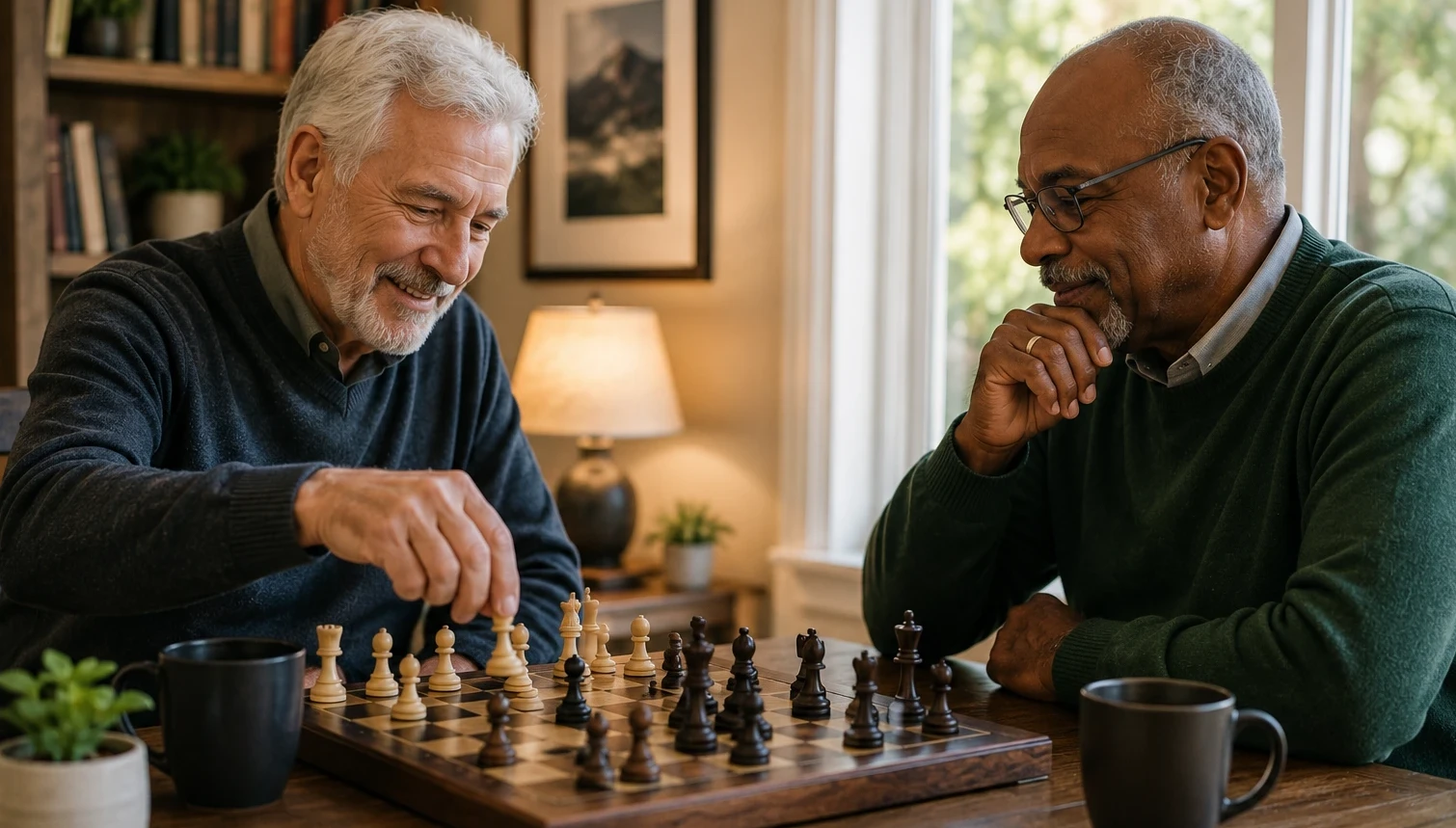
A weekly dinner with a close friend. A regular phone call with a sibling. A book club with four people you genuinely like. A volunteer role that puts you in regular contact with people who share your values. These are not consolation prizes for a smaller social life — they are precisely the kinds of connections the research identifies as most protective.
Practical Ways to Stay Meaningfully Connected After 50
Understanding the research is useful. Knowing what to do with it is more useful. Here are the approaches most consistently supported by both the research and the lived experience of people who maintain strong cognitive health into their seventies, eighties, and beyond.
Prioritize existing relationships deliberately
The relationships most likely to fade after 50 are the ones that were maintained by circumstance — colleagues you saw daily, neighbors whose children played with yours, friends whose lives ran parallel to yours through shared life stages. When the circumstances change, maintaining these relationships requires intention.
Schedule regular contact rather than waiting for it to happen organically. A standing monthly lunch. A weekly phone call. A text thread that stays active. The specific format matters less than the consistency and the genuine engagement it produces.
Find your community through shared purpose
Research suggests that relationships built around shared activity and purpose tend to be more cognitively stimulating and more emotionally sustaining than purely social relationships. Volunteering, joining a community organization, taking a class, participating in a faith community, or joining a club built around a genuine interest all provide the combination of social connection, cognitive engagement, and sense of purpose that the research identifies as most protective.
Embrace intergenerational connection
Relationships with people significantly younger than yourself — grandchildren, younger colleagues, mentees — provide a specific kind of cognitive stimulation that same-age relationships do not. They expose you to new perspectives, new language, new cultural references, and new ways of thinking about familiar problems. They also tend to generate a sense of purpose and relevance that is independently associated with better cognitive outcomes in older adults.
Use technology intentionally
Video calls, social media, and messaging apps are genuine tools for maintaining connection — particularly with family and friends who live at a distance. The research on technology-mediated social connection in older adults is largely positive, provided the technology is used to supplement rather than replace in-person interaction. A video call with a grandchild who lives across the country is genuinely valuable. Scrolling social media passively for two hours is not the same thing.
Address barriers honestly
Mobility limitations, hearing loss, transportation challenges, and the emotional weight of grief and loss are all real barriers to social connection for many older adults. Acknowledging them honestly is the first step to working around them. Many communities have programs specifically designed to support socially isolated seniors — senior centers, volunteer visitor programs, faith community outreach, and telehealth-based social programs have all expanded significantly in recent years.
Social Connection and the Bigger Picture
Social engagement does not operate in isolation from the other pillars of brain health. It works most powerfully in combination with physical movement, quality sleep, a brain-healthy diet, and, where appropriate, targeted nutritional support.
The brain is not a single-lever system. No one habit — however powerful — produces optimal cognitive health on its own. The research consistently shows that the people who maintain the sharpest cognitive function into their later decades are those who attend to multiple pillars simultaneously and consistently over time.
For a deeper look at the dietary side of that equation — including which specific foods have the strongest research support for protecting cognitive function after 50 — our article on the social interaction benefits for people over 50 explores the broader lifestyle context in which both diet and social connection operate.
The Bottom Line
Your brain evolved for connection. It is not simply that social interaction is pleasant or emotionally fulfilling — though it is both. Your brain is neurologically dependent on regular, meaningful social engagement to maintain its health, resilience, and function as you age.
The research is unambiguous: socially connected older adults have better memory, slower cognitive decline, lower rates of dementia, and longer, healthier lives than their isolated peers. The protective effect is large, consistent, and does not require expensive interventions or dramatic lifestyle changes.
It requires showing up for the people in your life. Staying curious about new people. Building community around shared purpose. Choosing connection over convenience when the two are in tension.
Your brain will thank you for it — in ways that compound quietly and powerfully over the years ahead.