What to Eat for a Sharper Mind after 50
If you have walked into a room and completely forgotten why you went there, struggled to recall a name that was right on the tip of your tongue, or felt mentally sluggish by early afternoon, you are not alone. Cognitive changes after 50 are among the most common concerns we hear from people in the second half of life — and one of the most frequently overlooked contributors is sitting right on your plate.
Before reaching for supplements or worrying about what these changes might mean, it is worth understanding something encouraging: what you eat directly and measurably affects how your brain functions. The foods you choose every day either nourish your brain’s ability to repair itself, form new connections, and process information clearly — or they quietly work against it.
The good news is that some of the most powerful brain-protective compounds on earth are not found in a pill bottle. They are found in ordinary foods available at every grocery store. Research into diet and cognitive health has accelerated significantly over the past two decades, and the evidence pointing toward specific foods as genuine brain protectors has never been stronger.
This article covers the ten best brain foods for seniors — what the research says about each one, why it matters specifically after 50, and simple ways to start incorporating them into your daily routine. If you are also dealing with persistent brain fog and want a deeper look at what causes it and what you can do about it, our free guide — Brain Fog and Confusion as We Age — is a useful place to start.
Why Food Matters More for Brain Health After 50
The aging brain has different nutritional needs than a younger one — and a reduced ability to meet them. After 50, several factors converge, making dietary choices more consequential than in earlier decades.
Nutrient absorption declines. The gut becomes less efficient at extracting vitamins and minerals from food, so deficiencies that would never have developed at 35 can quietly take hold at 55. B vitamins, magnesium, vitamin D, and omega-3 fatty acids — all critical for cognitive function — are among the most commonly deficient nutrients in adults over 50.
Chronic inflammation is increasing. Low-grade systemic inflammation, driven largely by diet, is now among the most studied contributors to cognitive decline. The aging brain is more vulnerable to inflammatory damage than a younger one, making anti-inflammatory food choices increasingly important as the decades pass.
Blood flow to the brain decreases. Cardiovascular and brain health are closely linked — what is good for your heart is almost always good for your brain. Foods that support healthy circulation also support cognitive function.
The gut-brain connection is increasingly significant. The gut microbiome — the community of bacteria living in your digestive system — communicates directly with the brain via the vagus nerve. As gut health changes with age, so can mood, clarity, and cognitive function. Many of the foods on this list support both brain and gut health.
Understanding these mechanisms makes the list below more than a collection of health tips. Each food on this list addresses one or more of these age-related vulnerabilities directly.
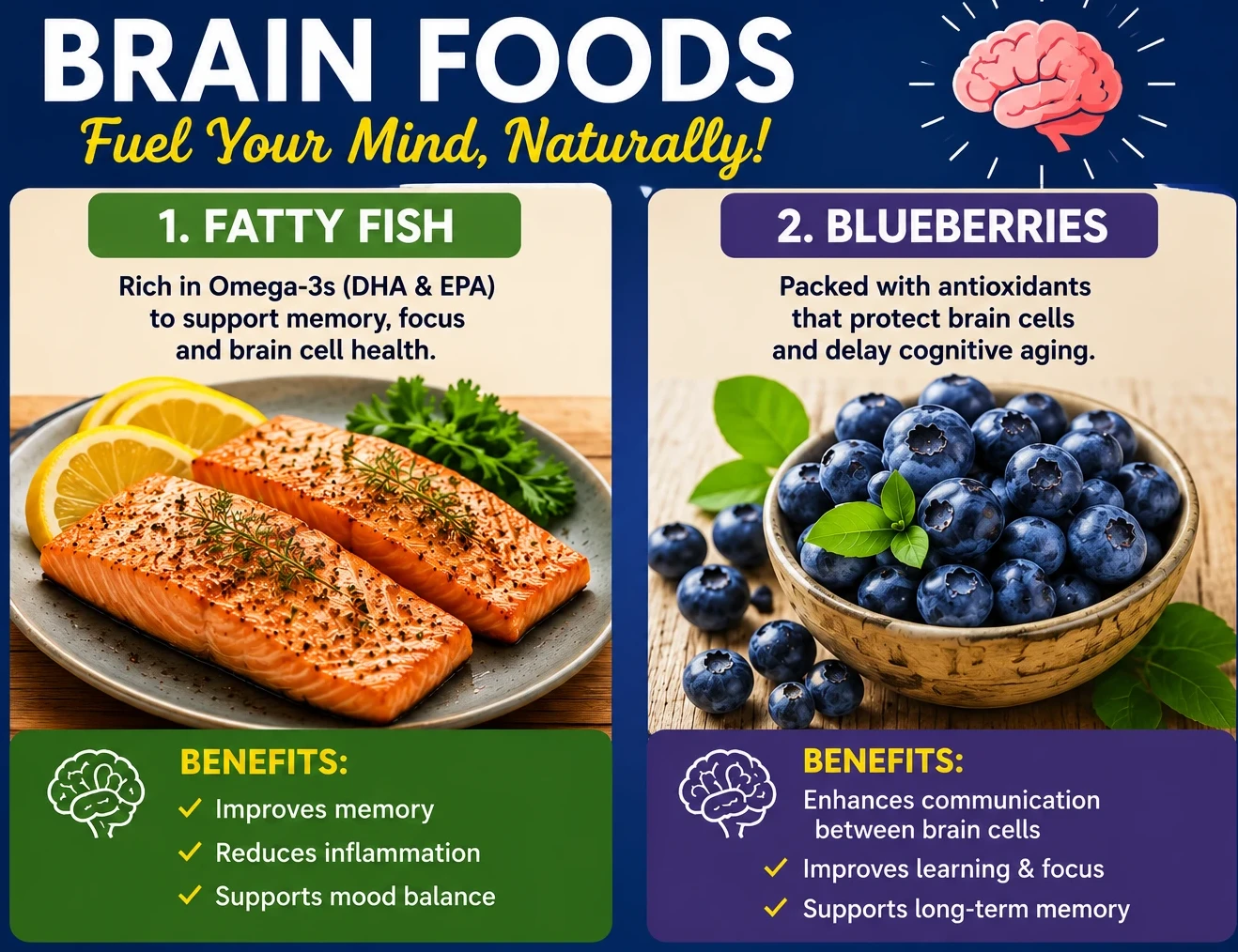
1. Fatty Fish
Salmon, sardines, mackerel, herring, and trout are the richest dietary sources of DHA and EPA — the two omega-3 fatty acids most critical for brain health. DHA alone accounts for about 30 percent of the fatty acids in the brain’s gray matter and is essential for maintaining the integrity of brain cell membranes.
Research consistently links higher fish consumption to slower cognitive decline among older adults. A study in the journal Neurology found that people who ate fish regularly had larger brain volumes in regions associated with memory and cognition than those who did not.
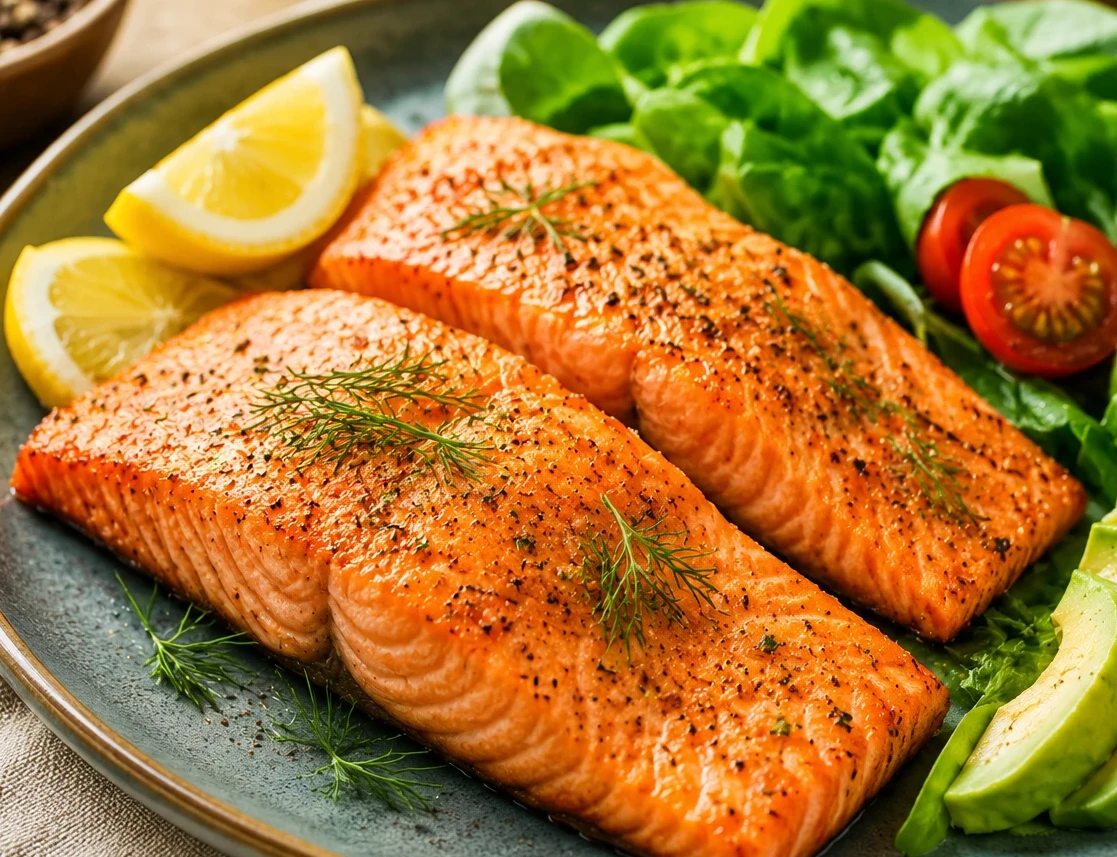
After age 50, the brain’s ability to synthesize DHA from other sources diminishes, making dietary intake increasingly important. Aim for two to three servings of fatty fish per week. If fish is not regularly part of your diet, a high-quality omega-3 supplement is worth considering — a topic covered in detail in our article on top brain foods for seniors.
2. Blueberries
Blueberries are among the most extensively researched brain foods. Their cognitive benefits stem primarily from anthocyanins — powerful antioxidant compounds that give blueberries their deep blue color and, crucially, can cross the blood-brain barrier to act directly on brain tissue.
Research from Tufts University and Harvard has linked regular blueberry consumption to improved memory, delayed brain aging, and enhanced communication among brain cells. One study found that older adults who drank blueberry juice daily for twelve weeks showed measurable gains on memory tests compared with a control group.
Fresh, frozen, and dried blueberries all retain their anthocyanin content. A handful added to oatmeal, yogurt, or a morning smoothie is one of the simplest high-impact dietary changes a senior can make.
3. Leafy Green Vegetables
Spinach, collard greens, Swiss chard, and romaine lettuce are nutritional powerhouses for the aging brain. They are rich in vitamin K, folate, lutein, and beta-carotene — a combination of nutrients that consistently associates with slower cognitive decline.
A landmark study from Rush University Medical Center followed more than 900 older adults over five years and found that those who ate just one serving of leafy greens per day had the cognitive ability of someone eleven years younger than those who ate none. One serving per day. That is a remarkable finding for a single dietary habit.
Folate deserves particular mention. It is a B vitamin abundant in leafy greens and plays a direct role in producing neurotransmitters — the chemical messengers your brain relies on for clear thinking and memory. Many older adults are folate deficient without knowing it.
4. Walnuts
Walnuts are the only nut that contains a meaningful amount of ALA omega-3 fatty acids, and they are also exceptionally rich in antioxidants and polyphenols that reduce oxidative stress in brain tissue. There is a reason walnuts look like small brains — they are among the best foods for the organ they resemble.
A study published in the Journal of Nutrition found that higher walnut consumption was associated with better memory scores, faster processing speed, and improved concentration in adults over 60. Another large study using data from the National Health and Nutrition Examination Survey found that walnut eaters scored significantly better on a series of cognitive tests than non-walnut eaters, regardless of age, gender, or ethnicity.
A small handful — roughly an ounce, or about fourteen walnut halves — is the serving size used in most research. They make an easy snack or a natural addition to salads and oatmeal.
5. Eggs
Eggs are among the most complete brain foods available and also among the most underappreciated. They are among the richest dietary sources of choline — a nutrient that most seniors are deficient in, and that plays a critical role in cognitive function.
Choline is a precursor to acetylcholine, the neurotransmitter most directly linked to memory formation and recall. When choline levels are low, acetylcholine production declines — and so does memory. Eggs also contain B12, B6, and folate, making them a comprehensive brain-nutrient package in a single, affordable food.
Research published in the American Journal of Clinical Nutrition found that higher choline intake was linked to better cognitive performance and a lower risk of dementia among older adults. Two eggs provide roughly half the daily recommended choline intake for most adults. They are also among the most versatile and affordable foods on this list.
6. Broccoli
Broccoli is one of the most nutrient-dense vegetables for brain health per calorie. It is high in vitamin K, which supports the production of sphingolipids — a type of fat densely packed in brain cells. It also contains glucosinolates, compounds that slow the breakdown of acetylcholine in the brain, helping maintain healthy neurotransmitter levels.
Perhaps most interestingly, broccoli contains sulforaphane — a compound currently under study for its neuroprotective properties. Early research suggests that sulforaphane may help reduce neuroinflammation and support the brain’s natural detoxification processes. Although the research is still developing, broccoli’s established nutritional profile alone makes it a valuable addition to any brain-healthy diet.
Lightly steamed broccoli retains more of its beneficial compounds than boiled. Roasting with olive oil is another preparation that preserves nutrients while making it considerably more enjoyable to eat regularly.
7. Pumpkin Seeds
Pumpkin seeds are an exceptional source of four minerals that are critically important for brain health and frequently deficient in older adults: magnesium, zinc, iron, and copper.
Magnesium is essential for nerve signal transmission, learning, and memory. Research has shown that magnesium deficiency is associated with impaired cognitive function and increased anxiety. Zinc plays a vital role in nerve signaling, and deficiency has been linked to cognitive impairment. Iron supports oxygen delivery to the brain, and copper helps control nerve signals.
A small handful of pumpkin seeds — easily added to salads, yogurt, or eaten as a snack — provides meaningful amounts of all four. They are also high in antioxidants and tryptophan, a precursor to serotonin that supports mood and sleep quality. Given that poor sleep is one of the most significant accelerators of cognitive decline after 50, foods that support sleep quality have a secondary brain benefit worth noting.
8. Dark Chocolate
Dark chocolate with 70 percent cacao content or higher contains flavonoids, caffeine, and antioxidants that have measurable benefits for brain health. The flavonoids in dark chocolate accumulate in brain regions associated with learning and memory, where research suggests they improve blood flow, enhance neuroplasticity, and reduce oxidative stress.
A study published in Nature Neuroscience found that cocoa flavonoids improved memory performance in older adults over a three-month period. Another study found that regular consumption of dark chocolate was associated with improved mood, reduced stress, and greater cognitive flexibility.
The key distinction is cacao content. Milk chocolate and most commercial chocolate bars contain too little cacao and too much sugar to deliver these benefits. Look for bars labeled 70 percent cacao or higher. One to two small squares daily is a genuinely enjoyable brain-health habit with solid research behind it.
9. Green Tea
Green tea offers a unique cognitive benefit that coffee does not: it contains both caffeine and L-theanine simultaneously. Caffeine alone can produce jittery, anxious alertness — particularly in seniors who have become more sensitive to stimulants with age. L-theanine, an amino acid found almost exclusively in tea, promotes calm, focused alertness without the edge.
The combination of the two compounds produces what researchers describe as relaxed focus — alert without anxiety, concentrated without overstimulation. This makes green tea particularly well-suited to older adults who find coffee increasingly disruptive to sleep or mood.
Green tea also contains EGCG — a catechin antioxidant under study for its potential to reduce the formation of amyloid plaques, the protein deposits linked to Alzheimer’s disease. While research is ongoing, the established benefits of green tea for circulation, inflammation, and focused alertness make it one of the most brain-friendly beverages.
10. Avocados
Avocados are rich in monounsaturated fats — the same type of healthy fat found in olive oil — that support healthy blood flow throughout the body and brain. Healthy circulation is one of the most important and most overlooked factors in cognitive health after 50. What keeps your cardiovascular system healthy keeps your brain well supplied with oxygen and glucose.
Avocados are also high in vitamin K and folate, both of which appear earlier on this list for good reason — they are among the most consistently supported by research brain nutrients available. They also contain lutein, a carotenoid that research from the University of Illinois has linked to improved cognitive function in older adults.
Additionally, the healthy fat in avocados helps your body absorb fat-soluble vitamins, including vitamin K, vitamin D, and beta-carotene, from other foods eaten in the same meal. Adding avocado to a salad containing leafy greens effectively amplifies the brain benefit of everything else on the plate.
Putting It All Together
You do not need to eat all ten of these foods every day. That is neither a realistic nor a necessary goal. What the research supports is consistent, regular consumption of brain-healthy foods as part of an overall dietary pattern — not perfection, but direction.
A practical starting point is to choose two or three foods from this list that you genuinely enjoy and find ways to incorporate them consistently. Blueberries in your morning oatmeal. A handful of walnuts as an afternoon snack. Salmon twice a week for dinner. Eggs for breakfast three or four mornings a week. These small, sustainable changes compound meaningfully over months and years.
The Mediterranean diet — which naturally includes most of the foods on this list — is the most extensively researched dietary pattern for brain health and longevity. If you are looking for a broader framework to guide your eating, it is the one most consistently supported by the research.
It is also worth understanding that food is the foundation — not the ceiling. A brain-healthy diet creates the nutritional environment in which everything else works better, including targeted supplements for cognitive support. The two approaches work together, not in competition.
For a deeper look at how social engagement, lifestyle, and community factor into cognitive health after 50, our article on social interaction benefits for people over 50 covers the research on one of the most powerful and most overlooked factors in healthy brain aging.
The Bottom Line
Brain fog, memory lapses, and mental fatigue after 50 are real — but they are not inevitable, and they are not untreatable. The foods you eat every day are one of the most powerful levers you have for protecting and supporting your cognitive health in the years ahead.
Start with the list above. Add one or two new brain foods this week. Build from there. Consistency over time is what moves the needle — not a perfect diet starting tomorrow.
If you are ready to go deeper on the supplement side of cognitive health — what the research actually supports, what to avoid, and how to build a sensible protocol one step at a time — Supplements for Memory Issues and Brain Fog covers everything you need to know. And if you are just getting started and want a clear, no-overwhelm introduction to brain fog and what causes it after 50, download our free guide below.
Your brain got you this far. It is worth taking care of.