
It’s a low-impact, accessible exercise that helps you maintain mobility and independence; regular walks can reduce your risk of heart disease and type 2 diabetes, strengthen bones and improve balance to lower fall risk, and boost mood, sleep quality, and longevity. To avoid injury, watch for uneven surfaces and prevent overexertion by pacing and wearing supportive shoes. Small daily sessions reliably improve your strength and confidence.
Understanding the Importance of Walking for Adults 50 and Over
Walking is a simple way to meet the WHO/CDC guideline of 150 minutes of moderate activity per week, which you can achieve by doing 30 minutes five days a week. Research links regular walking to lower risks of heart disease and type 2 diabetes, as well as improved balance and mood. If you aim for brisk walks at about 3 mph (≈100 steps/min), you gain more cardiovascular benefit without needing special equipment.
The Aging Process and Its Impact on Physical Activity
As you age, muscle mass and bone density decline, and joint mobility can decrease, making everyday tasks harder; reduced strength and balance also raise your fall and fracture risk. Incorporating walking preserves functional endurance and complements twice-weekly resistance work recommended for adults 50+ to slow sarcopenia and maintain metabolic rate. Small, consistent sessions, like three 10-15-minute walks daily, help you rebuild stamina with a lower injury risk.
Cultural Attitudes Towards Exercise in Later Life
Many societies see retirement as a time to slow down, which can discourage you from staying active. At the same time, cultures in Blue Zones (Okinawa, Sardinia) embed low-intensity activity and daily walking into routines, supporting longevity. Public messaging and family expectations shape whether you feel it’s appropriate to exercise; when communities normalize walking, participation rises, and health disparities shrink, especially among women and lower-income older adults.
Barriers such as ageism, limited safe spaces, and healthcare providers’ reluctance to prescribe activity reduce uptake. Still, community models show promise: programs like Walk with a Doc and local “walking groups” create social accountability and measurable increases in steps. You benefit most when walking is framed socially, and accessible-scheduled routes, buddy systems, and tailored pacing help people stick with regular activity.
The Role of Walking in Promoting Active Aging
Walking improves aerobic fitness, balance, joint mobility, and cognitive health while being low-impact enough for many chronic conditions; studies in older adults found meaningful mortality and functional gains from as few as 4,400 steps/day, with benefits plateauing near 7,500-8,000 steps. You can use step goals, timed walks, and modest uphill intervals to safely boost intensity, making walking a foundational tool for preserving independence.
Practical implementation matters: start with 10-15-minute sessions and increase by about 5-10% weekly; monitor exertion (talk test or heart rate); and add 2 short resistance sessions per week to protect muscles and bones. If you have cardiovascular or orthopedic issues, get medical clearance and favor supervised or group programs at first to minimize risk and maximize adherence.
Health Benefits of Walking
Cardiovascular Health and Reduced Disease Risk
Brisk walking for about 150 minutes per week lowers your risk of heart disease and stroke; studies show regular moderate activity can reduce cardiovascular events by roughly 20-30%. It helps lower high blood pressure and enhances circulation. If you aim for 30 minutes most days, you’ll see measurable changes in resting heart rate and blood pressure within weeks, especially when combined with a heart-healthy diet.
Strengthening Bones and Muscles
Weight-bearing walking stimulates bone remodeling and helps slow age-related bone loss, lowering your likelihood of fractures; walking briskly 30-60 minutes several times weekly is linked to better hip and spine density in older adults. You’ll also maintain muscle mass in calves, quads, and glutes, which supports balance and reduces fall risk when you stay consistent with your routine.
Adding short hills, stair climbs, or light hand weights increases mechanical load on bone and recruits more muscle fibers-try 10-15 minutes of inclines twice weekly. Intervals, such as 1-2 minutes brisk uphill followed by an easy pace, build strength efficiently; however, increase gradually to avoid overuse injuries and consult a professional if you have joint pain.
Enhancing Respiratory Function
Regular walking improves breathing efficiency and can raise your VO2 max by roughly 10-15% over months of training, helping you feel less short of breath during daily tasks. You’ll strengthen the diaphragm and accessory respiratory muscles, reduce resting respiratory rate, and improve oxygen delivery to tissues when you maintain consistent aerobic sessions of moderate intensity.
To boost lung capacity, include brief higher-intensity bursts-for example, 1 minute brisk/2 minutes easy repeated 6-8 times during a 30-minute walk-and practice diaphragmatic breathing while moving. If you have chronic lung disease, check with your clinician first, and stop and seek care if you experience chest pain or severe breathlessness.
Mental Health Benefits of Walking
Walking for 150 minutes per week of moderate activity (roughly 30 minutes, five days) aligns with major guidelines and is linked to measurable reductions in depressive symptoms and anxiety. You tap into increased endorphins, serotonin, and BDNF, which improve sleep and stress resilience. Try brisk neighborhood loops or park routes; consistent walking lowers symptom severity and supports emotional stability without medication for many with mild-to-moderate concerns.
Alleviation of Stress and Anxiety
Stepping outside for even 10 minutes interrupts acute stress cycles and often lowers heart rate and cortisol; you’ll notice calmer breathing and clearer thinking after a short stroll. Green-space walks reduce rumination more than urban routes, and splitting activity into two 10-15-minute bouts can be as effective as one longer session for easing anxiety.
Improvement in Mood and Emotional Stability
Regular walking boosts neurotransmitters like endorphins and serotonin, stabilizing mood and reducing mood swings; aim for 20-40 minutes, 3-5 times weekly. You also gain better sleep and sustained energy, which together enhance emotional resilience, and many people report mood lifts that persist for hours after a walk.
To amplify those effects, schedule walks at consistent times-morning daylight helps reset your circadian rhythm. Join a community group to add social connection, which magnifies mood gains and reduces isolation, or use an app to log walks and moods so you can track progress. When you mix brisk intervals with mindful breathing and varied routes, you solidify long-term emotional benefits.
Cognitive Benefits and Enhanced Memory
Moderate walking increases cerebral blood flow and stimulates BDNF, supporting memory centers; multi-month trials have shown increases in hippocampal volume and improved verbal memory. You can target 150 minutes per week of moderate-paced walking (about 30 minutes most days) to help preserve executive function and processing speed as you age.
Mechanistically, you gain both vascular clearance and molecular support: higher blood flow removes metabolic waste while elevated BDNF promotes neuronal health. Incorporate brisk 20-40 minute sessions 3-5 times weekly, add short uphill intervals to raise intensity, and vary routes or perform simple memory tasks during walks to challenge cognition; use the talk test or aim for 50-70% of max heart rate to optimize gains.
Walking as a Social Activity
When you walk with others, you get both exercise and connection; the CDC recommends 150 minutes of moderate activity weekly, and group walks make that goal easier and more enjoyable. Many people over 50 report improved mood, better cognition, and stronger adherence when walking socially, and programs that combine walking with conversation can reduce isolation while boosting physical activity without high impact. If you have health concerns, check with your clinician before starting.
Opportunities for Social Engagement and Community
You can tap into multiple local options-community centers, parks departments, faith groups, and programs like SilverSneakers-that organize walks, volunteer-led nature strolls, and charity walk events. Municipal “walking maps” and apps list routes and meeting points, helping you join events that attract 10-100 participants. Participating in a community walking event once a month often leads to ongoing weekly meetups and stronger neighborhood ties.
Walking Groups and Clubs for Companionship
You’ll find walking groups that meet 2-3 times per week with 8-15 regulars, which builds accountability and friendship; members typically report longer-term adherence and reduced loneliness. Clubs often set pace groups, use simple step goals, and pair new members with buddies, making it easier for you to join at your fitness level and stick with it.
Organized groups vary: some focus on social conversation and coffee stops, others on brisk fitness walking or measured routes with distance markers. Look for groups with trained leaders or first-aid plans, and ask about terrain, pace, and average distance. Strong safety practices-shared emergency contacts, visible clothing, and routes with good lighting-let you enjoy companionship while minimizing risk.
The Role of Walking in Family Bonding
You can turn regular walks into multi-generational routines that strengthen family ties: weekend nature walks, strolls to local markets, or short evening walks after dinner encourage conversation and shared memories. Activities like scavenger hunts for grandchildren or historical walking routes connect generations while adding gentle movement to everyone’s day.
Make walks accessible by choosing stroller-friendly or bench-lined routes, setting a relaxed pace, and keeping outings under 30-45 minutes for mixed-age groups. Establish simple ground rules-phone-free sections or turn-taking for route choice-and use walks to combine errands, stories, and light exercise so family time becomes a healthy habit rather than a chore.
The Physical Mechanics of Walking
Proper Walking Technique and Posture
You should keep your head up and gaze 10-20 feet ahead, relax your shoulders, and maintain a slight forward lean from the ankles while engaging your core. Strike with the heel close to your center of mass, roll through to a controlled toe-off, and avoid overstriding, which increases impact on knees and hips. Aim for a natural arm swing with elbows ~90° to help maintain cadence and balance.
The Importance of Footwear and Gear
Your shoes must offer a firm heel counter, adequate midsole cushioning, and a roomy toe box; look for a sole that balances forefoot flexibility with heel stability. Replace footwear every 300-500 miles and avoid worn tread, since degraded soles raise slip-and-fall risk. If balance is a concern, lightweight walking poles can reduce load and increase stability.
Fit matters: measure feet at the end of the day and allow about a thumb’s width (~1 cm) in front of your longest toe to accommodate swelling. Consider low-profile orthotics for overpronation, rocker soles for limited ankle dorsiflexion, and diabetic-friendly shoes if you have neuropathy. Use moisture-wicking socks, and employ a heel-lock lacing technique to prevent blisters and heel slippage.
How to Measure Your Walking Pace and Distance
Use a GPS watch or smartphone app to track pace in minutes per mile or per kilometer; many adults hit moderate intensity at about 100 steps per minute. Clinically, a gait speed of 1.2 m/s (~2.7 mph) signals good mobility for older adults. Step counters and apps also help you monitor progress toward targets like 7,000-10,000 steps/day, which are associated with better health outcomes.
Overcoming Common Barriers to Walking
Addressing Mobility Challenges
If you have joint pain, reduced balance, or limited range of motion, begin with seated warm-ups and short 5-10 minute walks, increasing by 2-3 minutes as tolerated. Use a cane or trekking poles for stability, schedule a session with a physiotherapist for tailored strength and balance exercises, and focus on ankle and hip strengthening twice weekly. Be aware that falls are the biggest danger, so prioritize safe surfaces and supportive footwear; even brief walks add up toward your fitness goals.
Time Management and Prioritizing Physical Activity
Break your day into 10-minute bouts-three sessions equal 30 minutes-and treat them as nonnegotiable appointments in your calendar. Aim for the public-health target of 150 minutes per week of moderate activity, or about 30 minutes five days a week, and use walking meetings, errands, or TV-commercial breaks to reclaim time. Small, consistent changes, like parking farther or walking the neighborhood after lunch, produce measurable benefits.
Try a simple weekly plan: walk 20 minutes before breakfast Monday-Friday, add a 10-minute midafternoon stroll, and a 10-minute evening cool-down on two days. Use a pedometer or smartphone to track progress. Setting a goal of 6,000-8,000 steps/day is realistic for many people over 50, and set calendar reminders, or buddy walks to keep you accountable.
Weather and Environmental Considerations
Dress in layers, choose waterproof, slip-resistant shoes, and wear high-visibility gear at dawn or dusk; move indoors when surfaces are icy or when temperatures threaten your safety. Seek indoor options like mall walking or community center tracks during extreme weather, and be aware that ice and heat pose the greatest immediate risks, so adjust plans rather than pushing through dangerous conditions.
When it’s hot, avoid midday heat-stay out when the heat index exceeds 90°F (32°C)-and carry water; when it’s cold, limit exposure if wind chill drops below 20°F (−6°C). Local resources like mall-walking hours, senior swim classes, and gym treadmill time provide safe, climate-controlled alternatives that keep you active year-round.
Walking Safely: Tips and Precautions
You should wear supportive shoes, carry ID and a phone, wear reflective clothing for evening walking, check medications that affect balance or blood pressure, and warm up for 5-10 minutes to reduce injury risk. Pick routes with benches and good lighting, walk with a partner when possible, and monitor your pacing and hydration. Assume that you reduce pace and seek help if you experience chest pain, severe shortness of breath, or dizziness.
- Supportive shoes and orthotics as needed
- Visible clothing and lights for low-light walks
- Route planning with benches and even surfaces
- Phone/ID and a walking buddy when possible
Choosing Safe Walking Routes
Pick routes with continuous sidewalks or wide shoulders, and avoid steep, uneven terrain if you have joint issues. Aim for loops of 1-3 miles near home so you can shorten the walk if needed. Use well-lit streets and parks with clear sightlines, check local crime maps or community groups for safety reports, and favor routes with benches every 0.25-0.5 miles for rests.
Recognizing Signs of Overexertion
Watch for sudden or worsening shortness of breath, chest discomfort, lightheadedness, fainting, irregular heartbeat, or nausea; if your exertion feels far above a brisk walk, for many older adults, that means your heart rate is above roughly 70-85% of (220−your age). Stop and rest. Pay attention to muscle cramping or confusion as warning signs.
If you encounter these signs, sit immediately, sip water, loosen tight clothing, and assess symptoms for 10-15 minutes; persistent chest pain, fainting, severe breathlessness, or confusion should prompt you to call emergency services. For non-emergency but concerning symptoms, new palpitations or unexplained dizziness, contact your healthcare provider and consider wearing a simple heart-rate monitor to track patterns over several walks.
Staying Hydrated and Nourished
Drink about 200-300 ml (7-10 oz) of fluid every 15-20 minutes during longer walks, and have ~250 ml 10-15 minutes before you start. Choose water for most walks, and add a small electrolyte drink if you’re sweating heavily or walking for more than 60 minutes. Carry a light snack, such as a banana or a 20-30 g carbohydrate bar, if walks exceed 60 minutes to maintain energy.
Electrolyte solutions with sodium help prevent hyponatremia during prolonged activity, and practical snack examples include a banana with 1 tbsp peanut butter, plain yogurt, or a small sandwich-each provides carbs and some protein. If you take diuretics or have kidney issues, consult your provider about specific fluid and salt guidance before changing intake patterns.

The Role of Technology in Walking
Technology now turns ordinary walks into measurable workouts, safety nets, and social events. You can use wearables to track steps, heart rate, distance, and GPS routes, while apps analyze trends over weeks and months so you spot improvements or plateaus. Integrating audio, health records, and emergency alerts adds practical value for the plus-50 crowd: automatic fall detection, medication reminders, and synced family sharing make each walk both productive and safer.
Fitness Trackers and Apps for Tracking Progress
You should choose trackers that match your goals: devices like Apple Watch, Fitbit Charge, or Garmin Vivosmart log steps, heart-rate zones, and VO2 estimates, while apps such as Strava, Apple Health, or Google Fit visualize trends and set reminders. Aim to compare 7-10 days of data before changing plans, use GPS for route accuracy, and watch battery life. Consistent daily data is what turns numbers into progress.
Music and Podcasts to Enhance the Walking Experience
Beat-matched playlists and curated podcast queues can raise tempo, focus, and enjoyment; for example, playlists at 120-140 BPM typically boost walking speed to about 3-3.5 mph, while 20-40 minute podcast episodes fit common walk lengths. Use services like Spotify, Apple Music, or Audible, and balance stimulation with awareness by keeping volume moderate and favoring podcasts that hold your interest without distracting from your surroundings.
You can refine audio choices for safety and motivation: try bone-conduction headphones to maintain ambient sound, download episodes offline to avoid connectivity gaps, and pick a 30-45 minute podcast series for a brisk walk. For pace control, create a playlist with progressive BPM shifts (e.g., 110 to 135 BPM over 30 minutes). Keep volume below a level that blocks traffic noise; maintaining situational awareness is necessary.
Virtual Walking Challenges and Communities
Joining virtual challenges on platforms like Strava, StepBet, or Charity Miles gives structure and social accountability; you can enter 30-day step goals, weekly distance targets, or charity pledge events that donate per mile walked. These communities offer leaderboards, badges, and group chats to help you feel supported and motivated. Watch for signs of overtraining and use built-in rest days-accountability boosts adherence, but safety still matters.
Practical ways to use challenges include joining a 4-8 week program with staged increases (e.g., +10% weekly steps), creating a small Strava club for local peers, or signing up for Charity Miles to tie miles to donations. If you prefer stakes, StepBet’s wager model can increase participation; otherwise, set measurable goals, like 7,000 steps/day for 2 weeks, and track compliance. Regular check-ins and simple rewards help sustain progress.
Incorporating Mindfulness into Walking
When you walk, tune in to breath, pace, and surroundings to gain mental and physical benefits; even modest amounts, like 20-30 minutes most days, meet health guidelines and pair well with guidance in How Often Should People Over 50 Be Walking? A Complete Guide, helping you balance frequency and intensity for sustained gains.
The Benefits of Being Present While Walking
Being present reduces stress hormones and improves attention: studies show short bouts of focused walking lower perceived stress and can boost working memory within weeks. You’ll notice a steadier mood, improved balance, and often better sleep when you discard distractions and concentrate on posture, foot placement, and breath during a 20-30 minute walk.
Techniques for Mindful Walking
Start with a simple breath-and-step rhythm: inhale two steps, exhale two steps, or do a sensory scan: name three sounds, three textures underfoot, and three colors you see. These practices anchor you and reduce wandering thoughts. Keep sessions short at first, then extend to 15-30 minutes.
For technique detail, begin with 5 minutes of mindful walking and add 1-2 minutes each session until you reach your target. Count steps in sets of 10 to maintain a steady pace, check your posture every few minutes (hips over ankles, shoulders relaxed), and limit headphone use so you can monitor balance. If balance is a concern, choose flat routes or use a walking pole, and consult a physical therapist for tailored cues.
Using Walking as a Time for Reflection
Use a walk to process a single issue: set a 10-20-minute timer, pick one question, and let your thoughts flow without multitasking. You’ll often generate clearer next steps when walking increases blood flow to the brain and supports problem-solving; follow the walk with a quick note to capture insights (journaling for 2-3 minutes).
Structure reflection by asking three focused prompts: what worked, what to adjust, and one immediate next action. Keep answers brief and action-oriented; for example, after a 12-minute walk, you might decide on a 10-minute follow-up call or a specific exercise goal. Using this routine twice weekly can convert wandering thoughts into practical plans.
Walking and Nutrition: Fueling Your Body
Pair your walks with smart eating to boost energy, recovery, and muscle maintenance; aim for the recommended 150 minutes/week of moderate activity and support it with enough protein (about 1.0-1.2 g/kg/day for older adults) and whole-food carbohydrates. Short walks benefit from a light snack; longer, brisker sessions may need more substantial fuel. For practical guidance on how walking supports health in later life, see Walking – the benefits for older people.
Nutrition Tips for Walkers
Choose meals that combine lean protein, whole-grain carbohydrates, and unsaturated fats to sustain walks and aid recovery; include vegetables for fiber and calcium-rich foods for bone strength.
- Protein
- Carbohydrates
- Healthy fats
- Fiber
- Electrolytes
You should aim for 20-30 g of protein in your post-walk meal to support muscle repair and 30-60 g of carbs before longer walks to maintain energy.
Pre and Post-Walk Snack Ideas
For short walks, grab a small banana or a slice of whole-grain toast with peanut butter 20-30 minutes beforehand; after walking, choose Greek yogurt with berries or a turkey sandwich to replenish glycogen and provide about 15-25 g of protein for recovery.
When you plan longer sessions (over 60 minutes), fuel with 30-60 g of carbs beforehand-think a bowl of oats or a fruit smoothie-and follow with a mix of protein and carbs within 30-60 minutes after: 200-250 mL chocolate milk, a protein shake with fruit, or cottage cheese with fruit are practical examples that combine ~20 g protein and 30-50 g carbs.
The Importance of Hydration
Maintain fluid balance by sipping water throughout the day and drinking about 500 mL in the two hours before a longer walk; dehydration raises the risk of dizziness and falls, so prioritize steady intake rather than large volumes at once.
Your thirst response may be blunted with age, so monitor urine color (pale straw is ideal) and drink small amounts-roughly 150-250 mL every 15-20 minutes during prolonged activity; for walks over 60 minutes or in heat, include a beverage with electrolytes to replace sodium lost through sweat.
Creating a Walking Routine that Works for You
You can make the routine of walking stick by matching frequency, duration, and intensity to your calendar: aim for 150 minutes per week of moderate activity, or start with 10-15 minute sessions if needed, then add 5-10 minutes weekly. Use a pedometer or phone to track steps (about 2,000-2,500 steps per mile), schedule fixed slots, and include two short strength or balance sessions to reduce fall risk and boost endurance.
Setting Realistic Goals and Objectives
Set SMART targets: specific, measurable, achievable, relevant, time-bound. For example, walk 20 minutes at a brisk pace (≈3 mph) five days a week for four weeks, then increase to 30 minutes; or add 500 extra steps per day each week until you reach your target. Track progress with a step counter or calendar, and pick one behavioral goal (like leaving shoes by the door) to anchor new habits.
Finding Your Ideal Walking Time and Environment
Choose times that fit energy and safety: mornings often mean cooler temps and fewer crowds, afternoons can offer social options, and mall or treadmill walking keeps you steady in bad weather. Prioritize surfaces that suit your balance-avoid uneven terrain if you have instability-and use supportive shoes, a phone, and reflective gear for low-light walks.
Check the weather and air quality before heading out: avoid strenuous walks when temperatures exceed 90°F or the air quality index is unhealthy. Use indoor options like mall walking, community center tracks, or a treadmill on heat or high-pollen days. Measure a loop-knowing a local 0.5- or 1-mile route helps you hit time or step targets reliably.
Adapting Your Routine to Your Lifestyle Changes
Build flexibility: swap one long walk for two 10-15 minute bouts if caregiving or appointments interrupt your day, and plan anchoring rituals (walk after breakfast, during lunch, or after dinner). When travel or calendar shifts occur, prioritize consistency over duration. Shorter daily walks maintain the habit and protect gains while you adjust.
Use practical substitutions: on trips, do stair circuits or a 15-minute hotel loop; during flare-ups, reduce duration by up to 50% and maintain frequency to aid recovery; if balance or joint pain limits you, choose smooth indoor tracks or use trekking poles. Keep a simple log to spot patterns and adapt goals as your life changes.
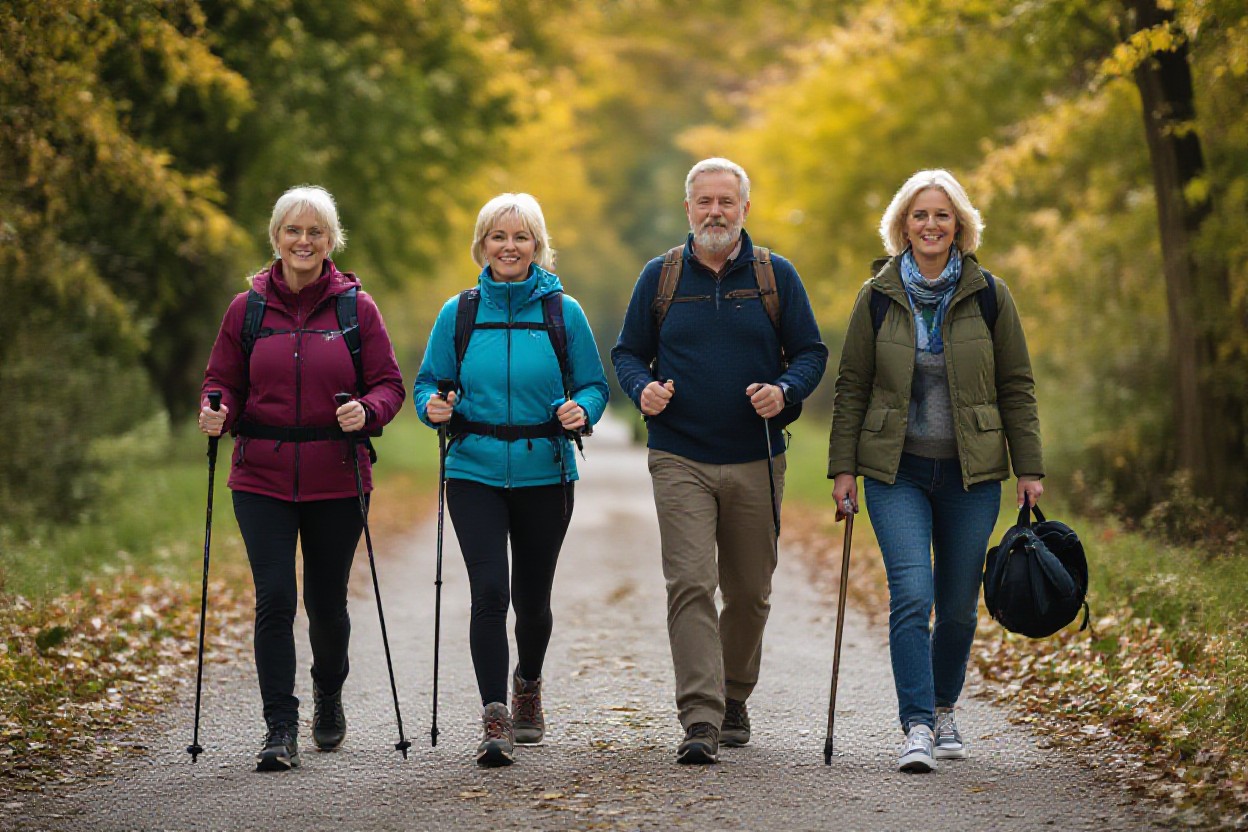
Exploring Different Types of Walking
| Power Walking | A faster pace (typically 4-5 km/h or higher) elevates heart rate and boosts calorie burn; ideal for cardiovascular gains and weight control. |
| Leisure Walking | Gentle pace around 3-4 km/h, low joint stress, supports mobility and recovery while promoting social engagement and mental wellbeing. |
| Interval Walking | Alternate brisk bursts and easy recovery (e.g., 1:2 ratio); shown to improve VO₂max and glucose regulation in older adults with sessions 3×/week. |
| Nature Walks | Timed walks in parks or forests, 20-30 minutes, can lower cortisol and reduce systolic blood pressure, enhancing mood and cognition. |
| Nordic/Assisted Walking | Uses poles to increase upper‑body engagement, improving posture, balance, and overall calorie expenditure with reduced knee load. |
- Leisure Walking protects joints and supports social health.
- Interval Walking maximizes cardio gains in less time.
- Nature Walks reduce stress and sharpen cognition.
- Nordic Walking adds strength and balance benefits.
Incorporating Interval Walking for Increased Benefits
You should try structured intervals, such as 1 minute brisk, 2 minutes easy, repeated for 20-30 minutes, to boost VO₂max and insulin sensitivity significantly; research in older adults shows measurable fitness gains with sessions performed 3 times per week over 8-12 weeks, making it time-efficient for improving cardiorespiratory health.
When you progress, aim for interval efforts at an RPE of about 6-8/10 or roughly 70-85% of estimated max heart rate (220 − your age); for example, a 60-year-old’s target during hard intervals would be roughly 112-136 bpm, and you should monitor symptoms-stop if you feel chest pain, dizziness, or undue breathlessness-and consult your clinician if you take heart-rate altering medications.
Nature Walks and Their Unique Advantages
You’ll gain mental and physiological benefits from nature walks: 20-30 minute sessions in green spaces lower cortisol and can reduce systolic blood pressure by several mmHg, while also improving attention and mood, making them a powerful complement to structured exercise for the plus‑50 crowd.
When you choose trails, uneven ground challenges proprioception and balance, helping reduce fall risk over time-but it also raises the chance of trips; wear supportive shoes, consider trekking poles, and start on well‑graded paths to build confidence, especially if you have balance issues. This variety helps you tailor walking to your goals, fitness, and safety needs.
Walking and Rehabilitation
Using Walking for Injury Recovery
You can use gentle walking to speed recovery after sprains, fractures, or joint surgery; low-impact ambulation increases blood flow, reduces stiffness, and aids collagen remodeling. Start with 5-10 minute sessions twice daily, increase by 5 minutes every 3-7 days as tolerated, and aim for 20-30 minutes, 3-5 times per week. If pain rises more than 2 points on a 0-10 scale or you notice new swelling, stop and consult your clinician. Avoid high-impact activity until cleared.
Adaptive Walking Techniques for Individuals with Limitations
Poles, canes, and walkers help you redistribute load, improve balance, and walk farther with less fatigue; Nordic poles can raise energy expenditure by about 10-20% versus regular walking and often reduce knee joint load, while a properly fitted cane can shift significant weight off an injured limb. Focus on device height, hand placement, and gait pattern; poorly fitted equipment increases fall risk and skin breakdown.
You should consider orthoses, shoe modifications, and assistive devices based on your specific impairment: an ankle-foot orthosis to stabilize foot drop, rocker-bottom soles to lower forefoot pressure for neuropathy, and a rollator for more support than a standard cane. Begin with supervised sessions-10-15 minutes, 2-3 times daily-and practice paced, step-to gait drills before advancing. Test devices in therapy to reduce falls and pressure sores.
Consultation with Health Professionals for Tailored Advice
Your physical therapist will assess gait, balance, strength, and pain to prescribe targeted exercises-examples include 3 sets of 10 heel raises, hip abductor strengthening twice weekly, and 10 minutes of balance drills daily. Expect an initial 45-60 minute evaluation and follow-ups of 30 minutes, 1-3 times per week. An orthotist can fit braces, and an occupational therapist can adapt your home. Seek immediate care for new numbness, sudden swelling, or severe pain.
A typical clinician-guided plan might run 8-12 weeks: weeks 1-2 focus on mobility and 5-10 minute walking bouts twice daily; weeks 3-6 progress to 20-30 minutes, 3×/week plus resistance training 2×/week; weeks 7-12 build endurance to 30-45 minutes, 4-5×/week and add balance challenges. You should track pain (0-10) and gait speed weekly; small gains, such as a 0.1 m/s increase in walking speed, indicate meaningful functional improvement.
Summing up
Conclusively, walking delivers accessible cardiovascular, joint-friendly exercise that supports balance, mobility, weight management and mental clarity as you age; by aiming for consistent, moderate walks and including varied pace or terrain, you improve endurance, bone health, mood and social connection with minimal equipment or risk, making it a sustainable, evidence-based habit to preserve independence and enhance your overall quality of life.